How Do ChatGPT Ads Work?
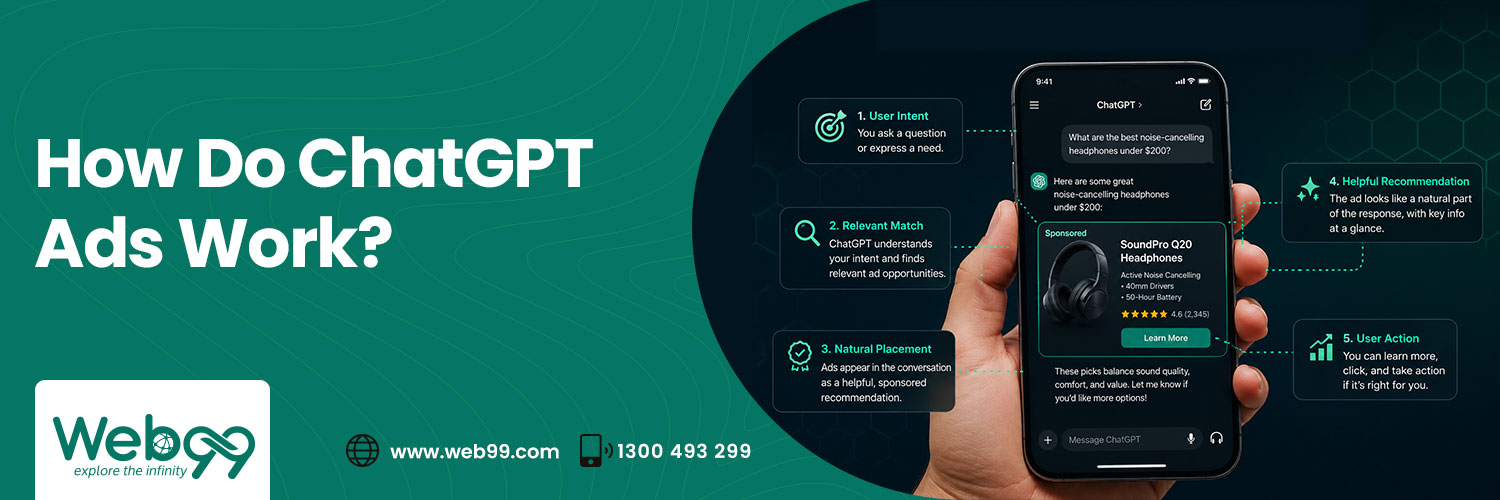
ChatGPT ads are paid placements that appear inside the ChatGPT platform, shown separately from the AI’s answer and clearly labelled as sponsored content. They work by matching ads to the intent behind a user’s question, not just specific keywords. This article explains how ChatGPT ads work, where they appear, how they compare to Google and social media ads, what makes them perform well, and how Australian businesses can use them effectively in 2026.
ChatGPT now has hundreds of millions of active users worldwide, and OpenAI has introduced an advertising system that lets brands appear within the ChatGPT interface. For Australian businesses, this is a genuinely new channel that works differently from anything before it. Traditional ads interrupt what a person is doing. ChatGPT ads appear when a user is already asking a question related to your product or service, which means the audience is already interested and the timing is naturally better.
What Are ChatGPT Ads?
ChatGPT ads are short, sponsored placements that appear inside the ChatGPT app or website during a conversation. They sit below the AI’s response in a clearly labelled sponsored section, so users always know the difference between the AI’s answer and a paid placement.
The format typically includes a brand name, a short headline, a brief description, and a link. OpenAI has confirmed that the AI’s answers are generated independently and are never influenced by which ads are being shown. Ads are currently shown to free and Go-tier users in selected regions, while Pro and business plan users do not see them.
How ChatGPT Ads Work
-
Context-based targeting
These ads are triggered by the intent of your conversation. Not by single keywords you type! If you’re planning a cheap holiday, ChatGPT may show a relevant travel deal ad. Businesses can guide ads, but relevance matters more than exact keywords.
-
AI response vs ad separation
Your AI answer and the ad are kept separate. The AI’s reply is focused on helping you, not selling a product. Businesses don’t control how ChatGPT answers your questions. An ad is clearly labelled and shown below the AI response.
-
Relevance-first delivery
Only ads that look useful and relevant to your conversation are shown. There are multiple ads! The system chooses the best-matching ad based on your question, location, and chat stage.
ChatGPT Ads vs Traditional Ads
Compared to Google Ads
Google Ads reach users who already know what they want and are ready to act. ChatGPT ads are more effective earlier in the journey, when someone is still exploring options and asking open-ended questions. The intent-based targeting lets you reach people who are considering your type of product or service, even if they have not yet decided exactly what they need. Both channels serve different stages of the customer journey and work well together rather than competing with each other.
Compared to social media ads
Social media platforms serve ads to people who are scrolling for entertainment, not actively looking for a solution, and targeting is based on demographics and past behaviour. ChatGPT ads reach users who have already typed a question, which signals a much higher level of intent and focus. This active mindset makes ChatGPT advertising particularly valuable for businesses whose customers spend time researching before they buy.
What Makes a High-Performing ChatGPT Ad
Conversational tone
Your ad copy needs to feel like a natural extension of the conversation the user is already having, because writing that sounds like a brochure or a television commercial will feel out of place and get ignored. The most effective ChatGPT ads use plain, friendly language that speaks directly to the problem the user just asked about.
Helpful, not salesy
The best-performing ads lead with the benefit to the user rather than a list of product features. If someone has asked about managing cash flow for their small business, an ad that says “See how thousands of small businesses track expenses without an accountant” will outperform one that simply promotes the product name. Connecting to the user’s actual concern always works better than listing your product’s credentials.
Smart call to action
Aggressive calls to action such as “Buy Now” feel pushy when the user is still in research mode. Softer phrases like “See how it works,” “Explore your options,” or “Find out if it suits your business” feel like a logical next step and are more likely to drive clicks from people who are genuinely interested rather than people who feel pressured.
Measuring ChatGPT Ads Performance
Standard last-click attribution does not tell the full story for ChatGPT advertising, because a user might first encounter your brand through a ChatGPT ad and then convert later via a Google search. More accurate approaches include:
-
UTM tracking:
Adds tracking codes to your ad links so your analytics platform can show exactly how much traffic came from ChatGPT campaigns.
-
Branded search lift:
Monitors whether more people search for your brand name after a campaign runs, which shows the ad is building awareness even among users who did not click straight away.
-
View-through conversions:
Captures users who saw the ad but converted later through a different channel, giving a more complete picture of how your campaign is contributing to results.
Where ChatGPT Ads Fit in Your Marketing Strategy
ChatGPT ads work best at the top and middle of the marketing funnel, where users are researching and comparing options, and they complement your existing SEO content and Google search campaigns rather than replacing them. A user might encounter your brand through a ChatGPT ad during research and then find your website through Google a few days later when they are ready to move forward. ChatGPT advertising adds visibility at the exact moment your potential customers are actively thinking about problems your business can solve.
Common Mistakes to Avoid
- Writing copy that sounds like a television commercial will not work in a conversational setting where users expect helpful and relevant content, not a hard sell.
- Using generic ad copy that does not match the conversation topic means your ad will feel irrelevant and be ignored, so connecting your message closely to what the user actually asked will always improve results.
- Expecting immediate sales conversions from a channel built primarily for awareness and research will lead to disappointment, so set realistic goals around brand visibility, website traffic, and assisted conversions.
FAQs
- Are ChatGPT ads available in Australia?
ChatGPT ads are rolling out in selected markets and may not yet be fully available in Australia. Check OpenAI’s advertiser documentation for the most current information on regional access.
- Do ads affect what ChatGPT says?
No. The AI generates answers based on the user’s question and its training data, completely independently of the advertising system.
- Can I target specific types of customers?
ChatGPT ads use conversational intent as the primary targeting mechanism. You can align ads to specific topics and locations, but the targeting is broader than the detailed demographic profiles available on social platforms.
- Are ChatGPT ads worth testing in 2026?
For businesses whose customers research before they buy, yes. Ad inventory is still less competitive than established channels, and early adopters are building familiarity with a format that will only grow in importance.
Conclusion
ChatGPT advertising places your brand in the middle of a real conversation at the exact moment a potential customer is actively looking for answers. The businesses that will get the most from this channel are those that write helpful copy, match their message to the conversation, and measure success across the full customer journey rather than just the last click. At Web99, we help Australian businesses make sense of emerging digital channels.
Discuss your next project
See Our Works
About Author

Prem Rathod
Director & co-founder
Prem Rathod is a highly skilled professional and co-founder of Web99, a digital marketing and web development agency based in Australia. With expertise in SEO, he is committed to providing innovative solutions to help businesses improve their online presence and visibility. With over a decade of experience in the industry, Prem is passionate about leveraging technology to automate processes and drive innovation in the healthcare sector. His proficiency in SEO, automation, and health tech has helped Web99 stay at the forefront of the industry. His skills in web development, UI/UX design, and project management have also been instrumental in the growth and success of the company.
