How to Rank Higher in Google Map Pack
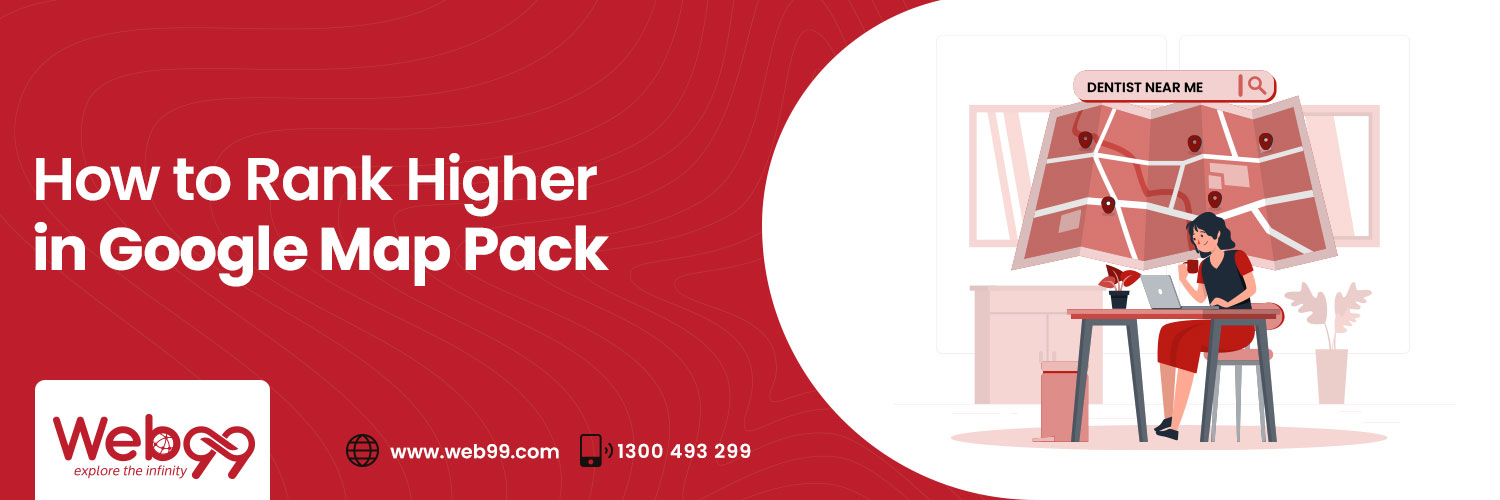
Think about the last time you searched for a local business on Google. Did you scroll past the first few results? Most people don’t. In fact, most customers pick one of the top three businesses shown right at the top of the search page — in a section called the Google Map Pack. If your business isn’t one of those three, you’re likely missing out on calls, visits, and revenue every single day.
This guide is written for local business owners in Australia who want to understand what affects their Google Map Pack ranking and what they can do about it. We’ll walk through the key factors, share practical strategies, and highlight the mistakes that hold most businesses back.
At Web99, we’ve studied hundreds of local search results across Australia and found clear, repeatable patterns that help businesses consistently reach those top three spots. Here’s what we’ll cover:
- The key ranking factors that matter most
- A step-by-step optimisation strategy
- How to study your competitors effectively
- Common mistakes to avoid
- Advanced tactics to stay ahead
What Is the Google Map Pack and Why Does It Matter?
The Google Map Pack also called the Local 3-Pack — appears at the top of search results for local queries, showing a map and the top three business listings with key details like name, address, phone number, ratings, and website links. It’s triggered when Google detects local intent and ranks businesses based on location, relevance, and popularity.
This section drives high-intent traffic, as users are ready to call, visit, or get directions. With the top three results capturing around 44% of clicks, ranking in the Map Pack means more enquiries and customers, while missing it means losing visibility to competitors.
Here’s a simple comparison between Map Pack rankings and standard organic SEO:
| Aspect | Map Pack Rankings | Organic SEO Rankings |
| Focus | Location, Google Business Profile, reviews, and local popularity | Website content, backlinks, keywords, and site speed |
| How Ranked | Proximity to searcher, then relevance and prominence | Overall site authority and match to search intent |
| Appearance | Map box at top of page for local searches | List of website links below the Map Pack |
| Key Factors | Consistent business info online, genuine reviews | High-quality pages, technical SEO, and authority |
Core Google Map Pack Ranking Factors
Google uses three main signals to decide which businesses appear in the Map Pack. Understanding these signals is the first step to improving your visibility.
1. Relevance — Matching What People Search For
Relevance is about how well your business matches a search. If someone searches “dentist in Brisbane” and your Google Business Profile clearly reflects that, you’re on the right track. To improve relevance, choose the correct primary category, add relevant secondary categories, list services in simple customer-friendly language, and keep your business description clear and focused on what you do and who you help.
2. Distance — How Close You Are to the Searcher
Google prioritises businesses close to the searcher. For example, a search in Parramatta will show nearby dentists first. Ensure your address is accurate and consistent across all platforms. If you’re a service-area business, hide your address if needed but clearly define your service areas, as even small inconsistencies can impact rankings.
3. Prominence — Building Trust and Authority
Prominence reflects how trusted and well-known your business is. Reviews play a major role — more genuine, recent, and detailed reviews improve rankings. Your website SEO, local backlinks, and citations also strengthen authority, while engagement signals like clicks, calls, and direction requests further boost your visibility.
Step-by-Step Strategy to Rank in the Google Map Pack
Step 1 — Optimise Your Google Business Profile Completely
Your Google Business Profile is the foundation of your Map Pack ranking. Ensure your Name, Address, and Phone number (NAP) are accurate, choose the right primary category, and add relevant secondary ones. List services clearly, upload real photos (not stock), and remove any duplicate listings to avoid confusion and split ranking signals.
Step 2 — Ensure NAP Consistency Across the Web
Google builds trust by checking if your business details are consistent online. Make sure your name, address, and phone number match exactly across your website, directories, and social profiles. Even small differences like “Ave” vs “Avenue” can cause issues, so regularly audit and fix inconsistencies.
Step 3 — Build a Localised Website Structure
Your website should support your profile with dedicated service and location pages. If you serve multiple areas, create unique pages for each with useful content, not duplicated text. Link service and location pages together and keep navigation simple so users and Google can easily understand your services and locations.
Step 4 — Generate High-Quality Reviews Strategically
Reviews help improve rankings quickly. Ask happy customers for reviews after a positive experience and encourage them to mention services and locations. Always respond to reviews professionally, and avoid fake reviews or incentives, as Google can detect and penalise them.
Step 5 — Implement Local Business Schema Markup
Schema markup helps Google better understand your business details. Add structured data including your name, address, phone number, services, and reviews, ensuring it matches your Google Business Profile. Consistent and clear data reduces confusion and supports higher rankings.
Advanced Google Maps Ranking Tactics
Analyse the Businesses Already in the Top 3
To outrank competitors, first understand why they rank. Compare the top three businesses based on categories, reviews, ratings, website authority, photos, and profile completeness. Identify gaps — for example, if they have more reviews or stronger backlinks — and focus on improving those areas to create a clear action plan.
Improve Engagement Signals
Google tracks how users interact with your listing, such as clicks, calls, and direction requests. To boost engagement, ensure your profile has a clear call button, an accurate description, and regularly updated photos. An active and complete listing builds trust with both Google and potential customers.
Strengthen Your Local Backlink Profile
Backlinks from other websites help build authority, and in local SEO, quality matters more than quantity. Focus on getting links from local sources like community organisations, business partners, and directories. These act as trust signals and strengthen your presence in your local area.
Optimise for Nearby Suburbs
If you serve multiple areas, make sure Google recognises it by mentioning nearby suburbs naturally in your website content. Create location-based pages or blogs that target local queries and showcase your work, helping you rank in surrounding areas and expand your visibility.
Common Mistakes That Prevent You from Ranking in Google Maps
Keyword Stuffing Your Business Name
Adding extra keywords to your business name might seem like a shortcut. But Google sees it as spam and can suspend your profile. Always use your real business name.
Buying Fake Reviews
Fake reviews might boost your rating for a short time. Google can spot fakes easily, which can lead to penalties or even a banned profile. Always get real reviews from real customers.
Ignoring Website SEO
A slow website with weak content can seriously lower your search rankings quickly. Google sees a poorly built website as a sign of weak business. Strong, fully optimised website supports your Google profile and boosts performance.
Creating Thin Location Pages
Very short pages that contain little useful information do not improve rankings. Google prefers pages that have helpful, detailed content for better search performance. Thin pages with minimal content can be ignored or even damage you’re SEO.
How Long Does It Take to Rank in the Google Map Pack?
There’s no single answer, because the timeline depends on how competitive your industry and location are, how active your Google Business Profile is, how quickly you can grow your reviews, and how strong your website already is.
As a general guide:
- Low-competition areas or niches: results may appear within 1 to 3 months
- Moderate competition: expect 3 to 6 months of consistent effort
- Highly competitive niches in major cities: 6 to 12 months or more
A few specific factors that affect your speed:
- Profile age: Newer profiles typically need 3 to 4 months to build enough trust signals before climbing.
- Review growth: Aim for a steady stream of 5 to 10 genuine reviews per month — slow growth slows your ranking.
- Website authority: A well-optimised website with strong local content and backlinks can cut your wait time significantly.
The most important thing is consistency. Check your ranking regularly, keep improving your profile and website, and don’t stop generating reviews. Businesses that stay active tend to rank — and stay ranked — far more reliably than those that set and forget.
Why Ranking in the Google Map Pack Is Predictable with the Right Strategy
A lot of business owners assume that Google Map Pack rankings are unpredictable or based on luck. They’re not. Google uses a consistent set of rules built around relevance, distance, and prominence — and businesses that send the right signals across all three consistently rise to the top.
Think of it this way: every mismatch in your business information, every missing review, and every weak page on your website creates a small amount of doubt in Google’s mind. Enough doubt, and Google chooses a competitor instead. A clear, consistent strategy removes that doubt. When your Google Business Profile, website, and online citations all tell the same story clearly and accurately, your business becomes the obvious choice.
Conclusion
Appearing in the Google Map Pack is one of the most effective ways to connect with local customers who are actively ready to buy. The good news is that rankings aren’t random — they’re driven by clear, measurable signals that any business can improve with the right strategy and consistent effort.
Start by auditing your local presence. Check your Google Business Profile for accuracy, review your NAP consistency across the web, and take an honest look at your review count compared to your top competitors. Small improvements in the right areas can make a significant difference to your visibility.
If you’d like a structured, data-driven local SEO strategy tailored to your industry and location, Web99 can help. We’ll work with you to build a sustainable Google Maps ranking system that keeps your business visible to local customers for the long term.
Frequently Asked Questions
1. How do I get into the top 3 on Google Maps?
Focus on three things: relevance, distance, and popularity. Match your profile to searches with the right categories, correct address, and real reviews. Update your profile and engage with customers—results appear in 3–6 months.
2. Why is my business not showing up in the Google Map Pack?
Common problems are mismatched contact info, wrong categories, or too few reviews. Google may also spot duplicates, spammy keywords, or a weak website. Fix these issues, build trust, and your business can appear again.
3. Do reviews really impact Google Maps rankings?
Yes! Reviews are super important for showing popularity. Google looks at quality, quantity, and how recent they are—good 4–5 star reviews help, while fake or bad ones can hurt.
4. Can I rank in the Google Map Pack without a physical storefront?
Yes, service-area businesses can still appear. Hide your address, set the suburbs you serve, and focus on categories and reviews. Good local engagement still helps you show up for nearby searchers.
Discuss your next project
See Our Works
About Author

Prem Rathod
Director & co-founder
Prem Rathod is a highly skilled professional and co-founder of Web99, a digital marketing and web development agency based in Australia. With expertise in SEO, he is committed to providing innovative solutions to help businesses improve their online presence and visibility. With over a decade of experience in the industry, Prem is passionate about leveraging technology to automate processes and drive innovation in the healthcare sector. His proficiency in SEO, automation, and health tech has helped Web99 stay at the forefront of the industry. His skills in web development, UI/UX design, and project management have also been instrumental in the growth and success of the company.